Loading...
Serving Antioch, CA and surrounding areas. (925) 503-1067
Cracked slabs and sinking sections are usually a base problem, not a surface one. We fix it right the first time, with proper ground prep built for Antioch's clay soils.
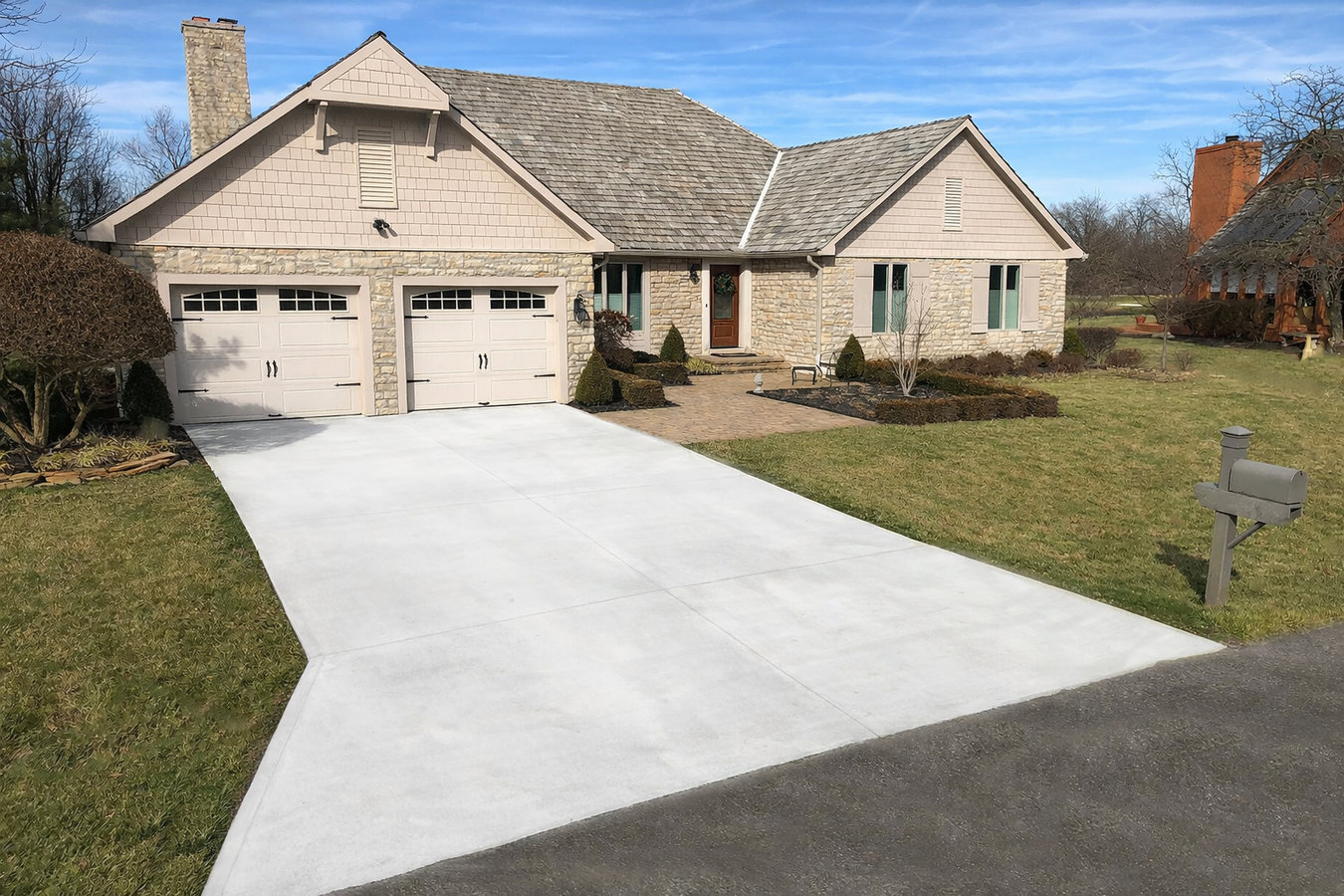
Concrete driveway building in Antioch, CA means removing the old surface, grading and compacting the ground, setting forms, and pouring a reinforced slab - most residential jobs take one to three days of active work, with vehicles back on it after seven days.
Most homeowners reach out because they are tired of patching the same cracks every spring. In Antioch, that cycle is usually caused by clay soil movement beneath the slab, not the concrete itself. A new driveway only lasts if the base underneath it is built to handle that seasonal expansion and contraction, as with any concrete driveway built on expansive soils.
If your property also needs a new walkway, our concrete patio construction service pairs naturally with driveway work and is often scheduled in the same permit application.
If you have patched the same cracks more than once and they keep coming back - sometimes in slightly different spots - the problem is in the ground underneath, not the surface. Antioch's clay-heavy soil shifts with the seasons, pushing on the slab in winter and pulling away in summer. Patching is a short-term fix.
A section that sits noticeably lower than the rest, or one you can feel when you drive over it, means the base underneath has settled unevenly. This is a safety issue: it can catch a wheel, create a tripping hazard, and direct water toward your garage. Sunken sections tend to get worse over time.
A properly built driveway slopes gently away from your house so rainwater runs toward the street. If puddles form near your garage door or foundation after rain, your driveway's drainage is failing. In Antioch's wet winters, that standing water can work its way under your garage slab or into your foundation.
When the top layer of concrete peels away in thin flakes, or the surface looks rough and pitted, the concrete has reached the end of its useful life. This kind of deterioration is more common on older driveways poured before modern techniques and tends to accelerate once it starts.
The most common request is a standard broom-finish slab: clean, practical, and priced for a typical two-car driveway. We also build thicker slabs for households with RVs, work trucks, or boat trailers - vehicles that exceed what a four-inch residential pour is designed to handle.
For homeowners who want more than a plain gray surface, we offer decorative upgrades including stamped patterns, exposed aggregate, and integral color - all applied during the original pour, which is always more cost-effective than adding them later. If you are considering a decorative surface, our concrete sidewalk building service can carry the same finish from driveway to front walkway for a cohesive look.
Every driveway we build includes proper slope away from the structure - typically one inch of drop per eight feet - so rain drains toward the street rather than toward your garage or foundation.
The right choice for most residential driveways: durable, clean, and cost-effective.
For households parking RVs, trailers, or work trucks - extra thickness and rebar for the added load.
Stamped, colored, or exposed-aggregate finishes for homeowners who want curb appeal alongside durability.
Antioch sits in the inland East Bay where summer temperatures regularly exceed 95 degrees and occasionally push past 100. Pouring concrete in that kind of heat requires scheduling pours for early morning, using mix additives that slow the setting process, and keeping the fresh slab moist for the first several days. A concrete driveway contractor who does not adjust for the local climate produces slabs that crack within the first summer.
The clay-heavy soils found across Contra Costa County are the other major factor. Clay expands when it absorbs winter rain and contracts during the dry season - a cycle that stresses any slab built without a properly compacted gravel base. We have seen this pattern in homes across Pittsburg, Brentwood, and throughout the east Antioch neighborhoods off Lone Tree Way - the same soil, the same failure mode.
For homeowners in newer subdivisions, Antioch HOAs in areas like Hillcrest and Deer Valley often require written approval before a permit can be filed. We are familiar with the typical HOA review process and can help you understand what is required before we submit anything to the city. The City of Antioch Community Development Department handles all residential driveway permits, and we manage that process from start to final inspection.
We ask a few quick questions, then schedule a free visit to measure the space and check ground conditions before giving you a written quote. We respond within 1 business day.
We handle the City of Antioch permit application on your behalf. Permit processing typically takes one to three weeks. We will give you a clear start date once the permit is approved.
The crew removes the old surface, grades and compacts the soil, sets forms, and pours the concrete. We cut control joints before the slab sets and apply a curing compound to protect against Antioch's heat.
After the seven-day curing period, we schedule the city inspection, then walk the finished driveway with you to confirm drainage slope, review the control joints, and answer any questions.
We respond within 1 business day. There is no obligation - just a straightforward conversation about your project. After you submit, someone from our office calls to schedule a free on-site estimate at a time that works for you.
(925) 503-1067Every project we run is covered by a current California C-8 Concrete Contractor license. You can verify our license number on the CSLB website before signing anything.
We live and work in Contra Costa County. We know the clay soil, the permit office, and the HOA neighborhoods in Lone Tree and Hillcrest. That local knowledge affects how we build.
We handle the City of Antioch permit from application through final inspection. Your project is documented and protected - no surprises when you sell.
The number you agree to is the number you pay. Our written estimates cover demolition, base prep, the pour, finishing, and cleanup - nothing is left vague.
A valid license, a pulled permit, and a written quote are not extras - they are the baseline for any job we take on. You can verify our California contractor license through the California Contractors State License Board before we ever set foot on your property.
Add a defined outdoor living surface that holds up through Antioch's wet winters and hot summers.
Learn moreConnect your driveway to your front door or backyard with a properly graded concrete walkway.
Learn moreAntioch's permit window means projects book up fast - call now or submit a request and we will get back to you within 1 business day.