Loading...
Serving Antioch, CA and surrounding areas. (925) 503-1067
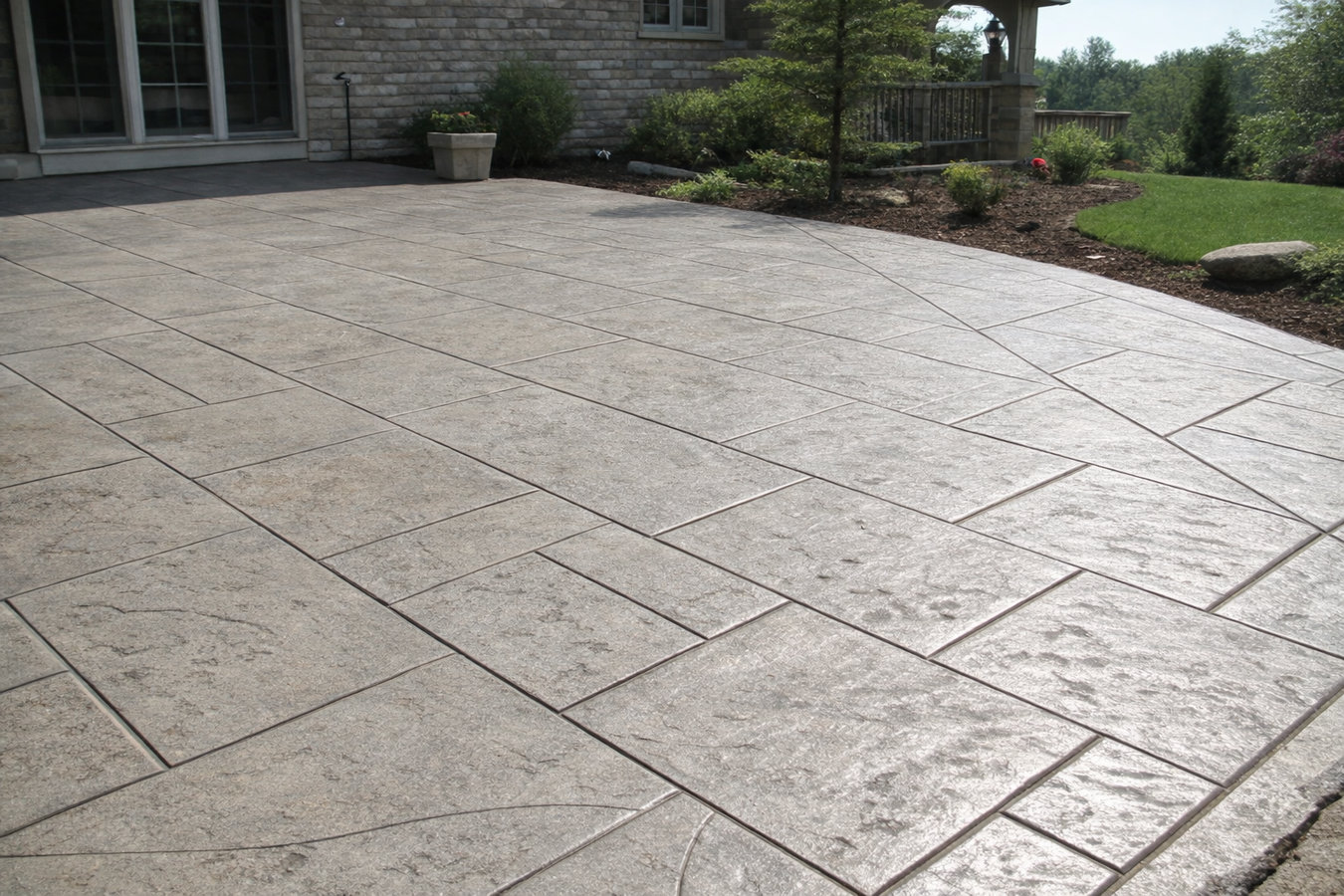
Plain gray is not your only option. Stamped concrete gives you the look of stone or brick at a lower cost, built for Antioch's heat and clay soils.
Stamped concrete services in Antioch, CA involve concrete stamping - pressing rubber mats into freshly poured concrete to leave patterns that mimic brick, slate, stone, or wood - most residential patios and driveways take one to three days of active work, with foot traffic allowed after 24 to 48 hours.
Most homeowners reach out because they want more than a plain gray slab but do not want to pay for natural stone or pavers. Stamped concrete gives you the visual appeal of premium materials on a solid, low-maintenance surface that handles Antioch's hot summers and clay soils when built correctly.
If you are also considering other outdoor surfaces, our concrete sidewalk building service can carry the same pattern from your patio to a front or back walkway, which keeps the whole exterior looking intentional.
If your driveway or patio has several cracks that have shifted so one side sits higher than the other, patching is unlikely to hold. In Antioch, clay soil shifts seasonally, and once that movement has caused significant cracking, the underlying problem keeps repeating. Replacing the slab and upgrading to a stamped finish is often a smarter investment than repeated patch jobs.
If you have updated your landscaping or painted the exterior but the concrete still looks like it belongs to a different decade, the contrast becomes obvious. A stamped concrete patio or driveway can bring the whole exterior together and add real curb appeal, which matters especially in Antioch's competitive resale market where first impressions count.
Smooth concrete near a pool or in a shaded spot that stays damp can become a slip hazard, especially for children and older family members. Stamped concrete with a textured pattern and a non-slip sealer additive gives you a surface that looks sharp and is safer underfoot. This is a practical upgrade that is easy to overlook until someone actually slips.
If you have stamped concrete that was installed more than five or six years ago and it looks chalky, faded, or is starting to flake, it may be past the point where resealing alone will fix it. Antioch's intense summer sun accelerates UV damage to concrete sealers, and a surface that has not been maintained on schedule can deteriorate faster than expected.
The most common request is a stamped patio with a single color and a straightforward pattern like ashlar slate or cobblestone. These jobs are well-suited to most Antioch backyards and pair naturally with our concrete sidewalk building service when the same finish is wanted on a walkway.
For homeowners who want a higher-end result, we also install multi-color stamped surfaces with custom borders and accent bands. These designs take more crew time and material, but the finished look is noticeably different from a single-color pour. Driveways with stamped finishes are another popular option, and they work well alongside our decorative concrete work when a homeowner wants a unified look across the whole exterior.
Every stamped project we install includes a UV-resistant sealer applied after curing. In Antioch's sun, that sealer is not optional - it is what keeps the color from fading within the first few years. We also walk every customer through a resealing schedule before we leave the job.
The most popular choice for Antioch backyards: a durable, textured surface in your choice of pattern and color.
Adds curb appeal without the cost of pavers - a single-color or multi-color pour with a border detail.
Textured patterns with non-slip sealer additives for safe footing around water.
Antioch sits at the eastern edge of Contra Costa County where summer temperatures regularly climb into the 90s and occasionally top 100 degrees. When concrete is poured in that kind of heat, the surface can dry out before the interior has fully hardened, which causes cracking and poor color adhesion. Contractors who learned their trade in cooler climates do not automatically adjust for this - Antioch summers require scheduling pours for early morning, using water-reducing admixtures, and protecting the surface during curing.
The clay-heavy soils found across this part of Contra Costa County are the other major factor. Clay swells when wet and shrinks when dry, and that seasonal cycle puts real stress on any slab built without a properly compacted gravel base. We have built stamped surfaces in Pittsburg, Concord, and throughout Antioch, and the base preparation step is non-negotiable in every one of those projects.
Many of Antioch's newer neighborhoods, particularly in the Lone Tree and Deer Creek areas, are governed by HOAs that regulate the colors and patterns allowed on driveways and front patios. We are familiar with the approval process and can help you confirm your design is acceptable before we submit anything to the city. The City of Antioch Building Division handles permits for this type of work, and we manage that process from application through final inspection.
We ask a few quick questions about the size and scope, then visit in person to measure the space and review site conditions before giving you a written quote. We respond within 1 business day.
Once you have a quote you are comfortable with, we walk you through pattern and color options with sample boards and photos of completed local jobs. The contract spells out every cost, including whether your project needs a permit.
We pull any required permits from the City of Antioch on your behalf. The crew removes the old surface, grades and compacts the base, and sets forms before any concrete is poured.
Concrete is poured early morning during warm weather, stamped while workable, and sealed after curing. We walk the finished surface with you, review the resealing schedule, and answer any questions before we leave.
We respond within 1 business day. There is no obligation - just a straightforward conversation about your project and your design options. After you submit, someone from our office calls to schedule a free on-site estimate.
(925) 503-1067Every project runs under a current California C-8 Concrete Contractor license. You can look up our license number on the CSLB website before signing anything. That license requires active insurance coverage, which protects you if anything goes wrong on the job.
We have been working in Antioch and the surrounding East Bay since 2022. We know the clay soil behavior, the permit office process, and the HOA approval steps common in the Lone Tree and Deer Creek neighborhoods.
Many Antioch neighborhoods built in the 1990s and 2000s have HOAs that regulate driveway and patio colors and materials. We are familiar with the approval process and help you understand what documentation you need before we submit anything to the city.
The number you agree to is the number you pay. Our written estimates include demolition, base preparation, pour, stamping, coloring, sealing, and cleanup. Nothing is left vague, and we do not add change orders for standard scope items.
Stamped concrete is one of the more technically demanding flatwork services - the pattern, color, and finish have to come together in a narrow window before the slab sets. You can review our California contractor license through the California Contractors State License Board before we start, and every project we run is backed by a written quote with no room for surprise charges.
Carry the same stamped pattern from your patio to a walkway for a unified exterior look.
Learn moreExplore the full range of decorative finishes beyond stamping, including staining and overlays.
Learn moreSpring and fall book fast in Antioch - reach out now and we will respond within 1 business day to schedule your free on-site estimate.