Loading...
Serving Antioch, CA and surrounding areas. (925) 503-1067
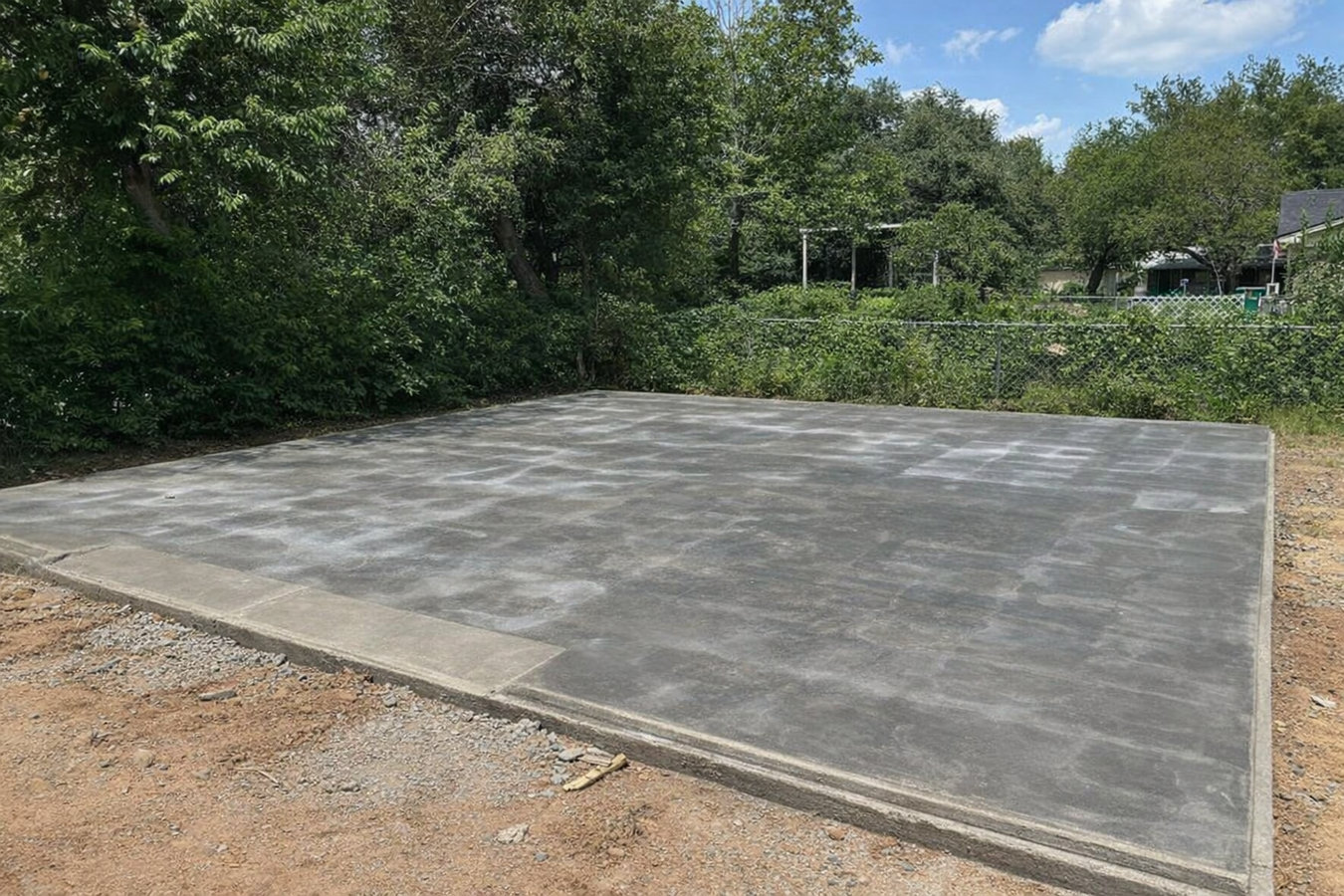
Clay soils and seismic requirements make foundation work in Antioch more demanding than most places. We handle soil prep, permitting, and inspections so your slab stays flat for decades.
Slab foundation building in Antioch, CA means grading and compacting the soil, laying gravel and a moisture barrier, placing steel reinforcement, and pouring a single thick layer of concrete that becomes both the floor and the structural base of your home or addition - most residential jobs take two to four days of active work, with the full process including permits and curing running three to six weeks.
Most homeowners in Antioch need a slab for a new garage, an ADU, a room addition, or because an existing foundation has shifted enough that replacement is more practical than repair. The clay-heavy soils common across Contra Costa County mean the preparation work beneath the slab matters as much as the concrete itself.
If your project involves a full structure rather than a simple floor slab, our foundation installation service covers raised perimeter foundations and the deeper footings that new construction often requires.
Hairline cracks are normal in concrete. But cracks wider than a quarter-inch, or cracks that seem larger every time you look at them, suggest the slab beneath you is moving. In Antioch, the most common cause is clay soil expanding and contracting with the seasons. Waiting lets the problem grow and makes repair more expensive.
When a slab shifts, the walls and door frames shift with it. If doors that used to swing freely now stick at the top or bottom, or if you can see daylight around a window frame that used to fit snugly, the foundation beneath may be moving. This is especially worth noting in older Antioch homes on clay-heavy lots.
If standing water appears near the base of your walls after rain, the existing slab or the drainage around it is not doing its job. Antioch's wet winters push water toward low-lying foundations. Prolonged moisture against a slab weakens the concrete and can allow mold and deterioration to develop inside the structure.
If you are adding a garage, an ADU, a workshop, or a room addition, you almost certainly need a new slab before any walls go up. The slab is the starting point. If you are unsure whether your planned project requires a new foundation, the City of Antioch Building Division can advise you before any contractor work begins.
The most common request is a standard slab-on-grade for a new ADU, garage, or room addition. These slabs are typically four inches thick across the main floor area, with a thickened perimeter beam of twelve inches or more to carry wall loads. Every pour includes a gravel base, a plastic moisture barrier, and a steel reinforcing grid - all required by the City of Antioch Building Division for permitted work.
For homeowners converting a garage or unpermitted space into living area, we assess the existing concrete before recommending a path. Many garage slabs lack the moisture barrier and reinforcement level required for habitable space, making a new pour necessary before walls and flooring can go in. We also handle thickened slabs for workshops and outbuildings where equipment loads exceed residential design standards.
When a project calls for concrete footings beneath posts or columns in addition to the main floor, our concrete footings work is coordinated in the same permit and poured in the same sequence to keep the project moving efficiently.
The right choice for ADUs, garage conversions, and room additions - four-inch pour with gravel base and moisture barrier.
For workshops, equipment pads, or outbuildings where the floor needs to carry loads beyond normal residential design.
For homeowners converting existing garages or adding backyard units under California ADU laws - assessed and permitted to meet habitable-space standards.
Antioch sits at the eastern edge of the Sacramento-San Joaquin Delta, and much of the city is underlain by clay-heavy soils that swell when they absorb water during the rainy season and shrink back when they dry out. That seasonal movement is the primary reason slabs crack and settle in this area. A contractor who does not account for the soil on your specific lot - with thorough compaction, the right gravel depth, and sufficient steel reinforcement - is building something that will fail within years, not decades. The California Geological Survey documents expansive clay zones across Contra Costa County, and Antioch falls squarely within them.
Antioch summers regularly push above 95 degrees and occasionally exceed 100. Fresh concrete poured in peak afternoon heat dries too fast on the surface before curing properly inside, producing premature cracks that cannot be reversed. Our crews schedule summer pours for early morning and use curing compounds or wet covers to slow the drying process - steps that experienced local contractors take as a matter of routine.
We have built and assessed slabs across the city, including in Pittsburg, Brentwood, and throughout east Antioch where a wave of ADU construction has been active in recent years. The permit requirements, the soil conditions, and the inspection process are consistent across these areas - and we know what to expect at each step.
We ask a few questions, then visit your lot to check soil conditions and measure the project before writing a quote. We respond within 1 business day.
We submit the permit application to the City of Antioch Building Division on your behalf. Permit approval typically takes a few days to a few weeks. We give you a clear start date once the permit is approved.
The crew grades and compacts the soil, lays gravel and a moisture barrier, places rebar, and passes the city's pre-pour inspection. Then the concrete is poured, finished, and control joints are cut.
We protect the fresh slab with curing compound or covers. After the required curing period, the city does a final inspection. We then walk you through the finished work and answer any questions.
We handle the permit application, city inspections, and soil preparation - you get a written quote before any work starts and a slab built for Antioch's clay soils.
(925) 503-1067We hold a current California C-8 Concrete Contractor license. You can verify our license number on the CSLB website in about two minutes before signing anything.
We work across Antioch and the surrounding East Bay. We know the clay soil conditions, the City of Antioch permit office, and the inspection timeline - local knowledge that affects how we build and price every job.
We manage the City of Antioch permit application and coordinate both required inspections. You never need to call the Building Division yourself - we keep you updated at each step.
Our estimates are based on your actual lot and soil conditions, not a generic per-square-foot number. The price you agree to is the price you pay - no mid-project change orders.
Foundation work in Antioch involves real variables - clay soil, seismic requirements, and an active permit office. We have worked through each of these on jobs across Contra Costa County since 2022. You can verify our California C-8 license on the CSLB website before calling us - that transparency is how we earn trust before the first shovel goes in the ground.
Full foundation installation for new homes and major additions, including raised perimeter foundations.
Learn moreIndividual footings for posts, columns, and load-bearing structures that anchor everything above them.
Learn moreAntioch's ADU demand means our calendar fills quickly in spring and summer - reach out now to lock in your start date.