Loading...
Serving Antioch, CA and surrounding areas. (925) 503-1067
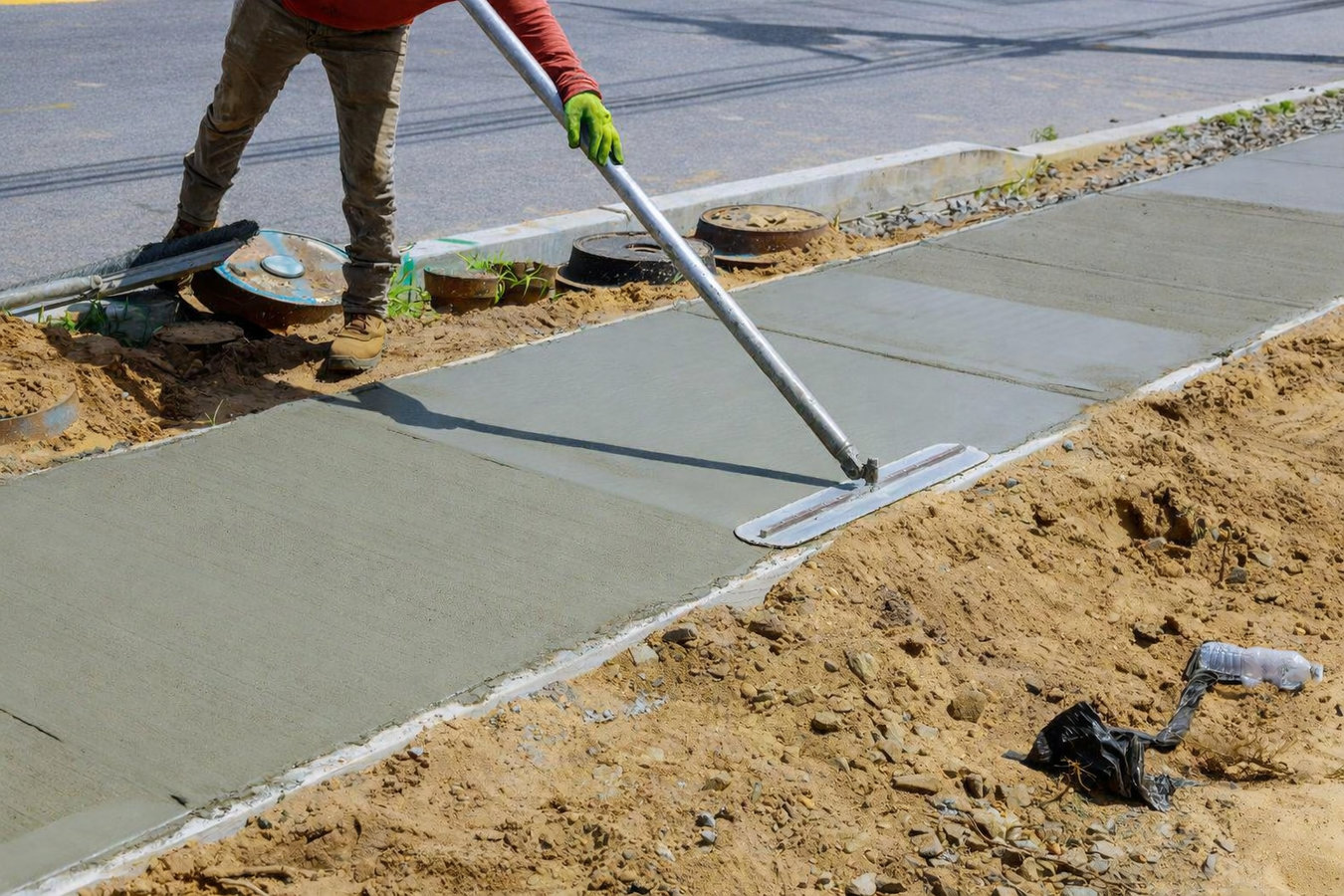
Cracked and lifted walkways are a tripping hazard and a liability. We build sidewalks that hold up through Antioch's soil movement, tree roots, and summer heat.
Concrete sidewalk building in Antioch, CA involves removing the old surface, excavating the ground, compacting a gravel base, setting forms, and pouring a finished slab - most residential sidewalk projects take one to three days of active work, with light foot traffic allowed after 24 to 48 hours.
Most homeowners reach out because a section has lifted, cracked, or is being pushed up by a tree root. In Antioch, that kind of failure is almost always driven by the clay soil underneath or by roots from established neighborhood trees, not by the concrete itself. A replacement only holds up if those underlying conditions are addressed before the new slab goes in.
If your project involves the front of the property, our concrete driveway building service is a natural pairing, and both can often be covered under the same permit application, saving time on the city review process.
Small hairline cracks in concrete are normal and usually cosmetic. But if you can fit a pencil into a crack, or if cracks run all the way across a section of sidewalk, the slab has structurally failed. In Antioch, this kind of damage is often caused by the clay soil shifting through wet and dry seasons, and once it starts, it tends to get worse each year.
If one section of your sidewalk sits noticeably higher or lower than the one next to it, that is a tripping hazard. In California, it is also a liability issue if someone falls. This kind of uneven settling is common in Antioch neighborhoods where tree roots or shifting soil have pushed sections out of alignment. A lip of even half an inch is enough to catch a foot.
If a section of your sidewalk is being pushed upward by a root growing underneath it, the damage is already done. The root will keep growing and the slab will keep lifting. This is a very common situation in Antioch's older neighborhoods with established street trees, and it typically requires removing the damaged section and either redirecting the root or designing around it.
Some Antioch properties, particularly on larger lots or in areas developed before sidewalk requirements were standard, simply do not have a sidewalk connecting the driveway to the front door. If you are navigating across dirt, gravel, or grass every time you come home, a new concrete sidewalk is one of the most practical improvements you can make.
The most common project is a standard four-inch broom-finish sidewalk connecting a driveway to a front or back entrance. We also build wider walkways and courtyard paths, including those that carry into a garage floor concrete project when a homeowner wants a consistent surface from the street to the interior of the garage.
For homeowners who want more than a plain gray finish, we build sidewalks with stamped or exposed-aggregate surfaces that match a patio or driveway. These finishes cost more than a standard broom surface but are applied during the original pour, which is always the most cost-effective window. When the same finish runs from the front walk to a larger surface, the concrete driveway building work and the sidewalk are usually scheduled together.
Every sidewalk we build includes properly spaced control joints, a broom or textured finish for grip, and drainage slope away from the structure. Thickness is specified based on whether the path will see any vehicle crossings, like at a driveway apron.
The practical choice for most Antioch homes: durable, slip-resistant, and correctly sloped.
Stamped or exposed-aggregate surface for homeowners who want a unified look with their patio or driveway.
Thicker six-inch slabs for areas where a vehicle will cross the sidewalk line from street to driveway.
Antioch regularly sees summer temperatures above 95 degrees, and that heat is genuinely hard on fresh concrete. When the surface dries too fast before the interior has fully set, it produces hairline cracking and a weaker finished slab. Experienced local contractors schedule pours for early morning during summer months and use techniques to slow the drying process. It is one of the main reasons hiring someone who has worked extensively in the East Bay matters.
The clay-heavy soils that run across much of Contra Costa County are the other major factor. That soil swells when wet and shrinks when dry, and over time it pushes and pulls on any slab built without a properly compacted gravel base. We see this play out regularly in projects across Pittsburg, Brentwood, and throughout Antioch - the same soil behavior, the same early cracking when the base is skipped.
Many of Antioch's older neighborhoods also have large, established street trees whose roots grow under sidewalks and eventually lift or crack the slab. We assess root conditions before any pour and discuss whether the new design needs to work around them. Any project that touches the public right-of-way requires an encroachment permit from the City of Antioch Public Works Department, and we handle that application on your behalf.
We schedule a free visit to measure the area, look at existing surface conditions, and check for tree roots or drainage concerns before giving you a written quote. We respond within 1 business day.
If your sidewalk touches the public right-of-way, we obtain the City of Antioch encroachment permit on your behalf. This step protects you from fines and ensures the finished work meets city standards.
The crew removes any existing concrete, excavates to the correct depth, and compacts the base. This preparation step is the most important part of the job, because a properly prepared base keeps your sidewalk from cracking or sinking over time.
Concrete is poured, leveled, finished with a broom texture for grip, and control joints are cut before the slab sets. After the 24 to 48 hour initial curing period, we do a final walkthrough and confirm when the path is clear for normal use.
We respond within 1 business day. There is no obligation - just a straightforward conversation about your project and what the ground conditions look like. After you submit, someone from our office calls to schedule your free on-site estimate.
(925) 503-1067We carry a current California C-8 Concrete Contractor license, which you can verify on the CSLB website before we start any work. That license requires active insurance coverage - if something goes wrong on the job, you are not left holding the bill.
The City of Antioch requires an encroachment permit for sidewalk work in the public right-of-way. We manage the application from start to approved, so you are not navigating the permit office yourself or risking work that was done without authorization.
We check for tree roots and review the soil conditions before any concrete goes in. In Antioch's older neighborhoods, skipping this step is the single most common reason a new sidewalk starts lifting within a few years.
The price you agree to is the price you pay. Our estimates break out demolition, base preparation, the pour, control joints, broom finish, and cleanup. There is nothing left vague, and we do not add change orders for standard scope items.
A licensed contractor, a pulled encroachment permit, and a proper base are not upsells - they are the minimum for a sidewalk that will still be standing in 30 years. You can verify our California license on the California Contractors State License Board before we schedule the estimate, and the American Concrete Institute sets the professional standards we build to on every project.
Upgrade the floor surface inside your garage with the same quality base prep and finishing standards.
Learn moreReplace a cracked or sunken driveway with a properly permitted concrete slab built for Antioch's clay soils.
Learn moreSummer schedules fill up quickly in Antioch - reach out now and we will respond within 1 business day to schedule your free on-site estimate.