Loading...
Serving Antioch, CA and surrounding areas. (925) 503-1067
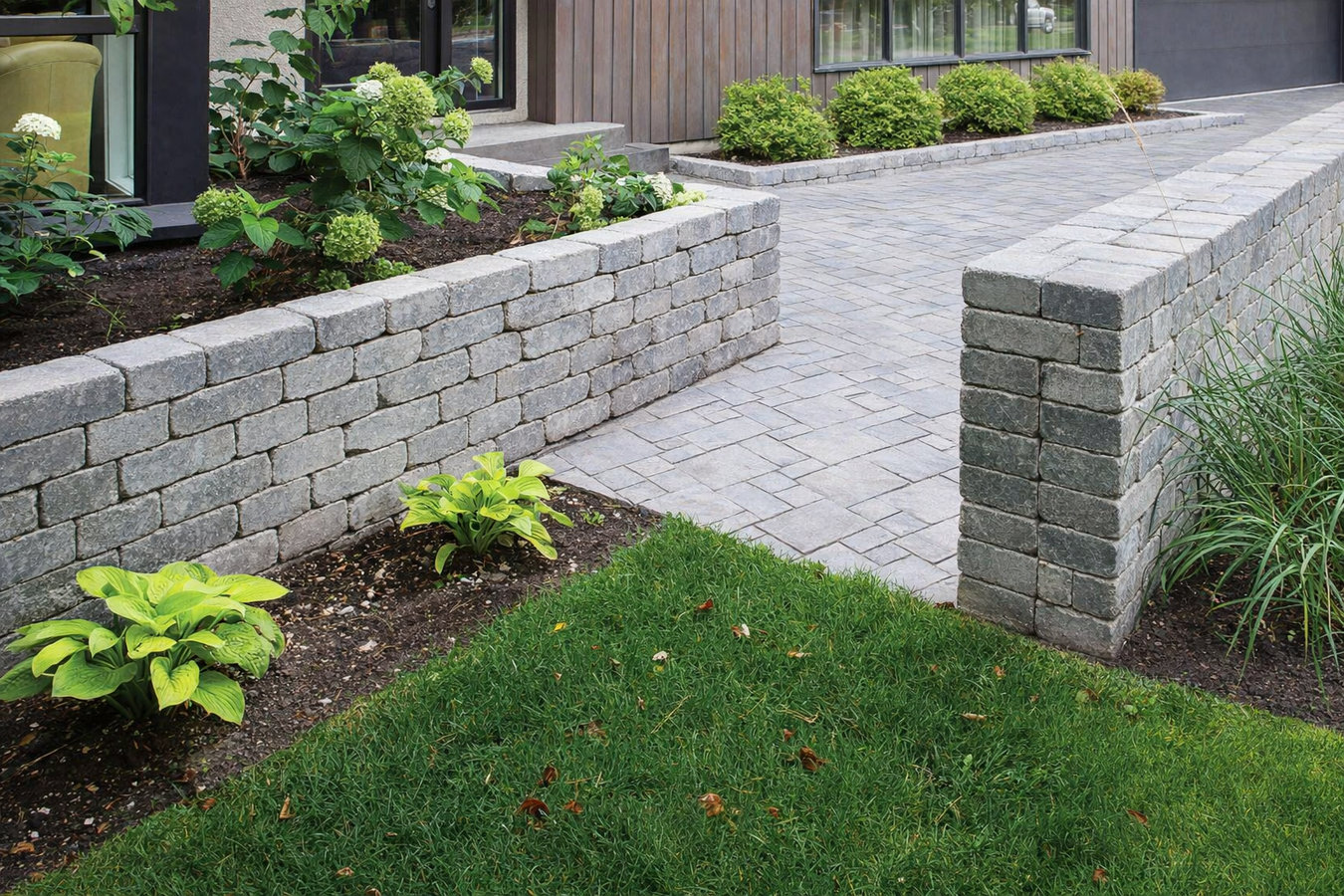
Sloped yards in Antioch erode a little more every wet season. A properly drained concrete retaining wall stops that cycle and turns hillside into usable space.
Concrete retaining walls in Antioch, CA are built by excavating to footing depth, pouring a reinforced base, and constructing the wall with gravel backfill and drainage pipe behind it - most residential projects run two to five days of active work, with one to three weeks added upfront if a city permit is required.
Most homeowners contact us because they have watched soil creep downhill a little more each rainy season, or because an existing wall has started to lean. In Antioch, both problems almost always trace back to clay soil and inadequate drainage, not to the wall material itself. Getting the drainage right is what separates a wall that lasts 50 years from one that fails within a decade.
If a grade change in your yard also creates a need for level access, our concrete floor installation service can extend a flat, finished surface into garages or utility spaces that benefit from the newly graded area.
If you see soil creeping downhill after a storm, or mulch and plants shifting out of place on a slope, the ground is telling you it needs support. Antioch's clay soils become saturated in late winter and lose their grip on slopes. A retaining wall stops that movement before it reaches your patio, driveway, or foundation.
Any forward tilt, horizontal cracks in the middle of the wall, or sections that bow outward are structural warning signs. Walls built without proper drainage absorb wet-season pressure year after year until they fail. This pattern is common in Antioch's older neighborhoods where walls predate modern drainage requirements.
If rainwater collects against your house or garage instead of draining away, a slope without containment is directing it there. Retaining walls combined with proper grading redirect that water safely away from your home. Foundation repairs caused by chronic pooling cost far more than a wall.
Many Antioch homeowners have backyards that drop too sharply for a patio, garden, or play area. A retaining wall lets you cut into the slope and create a level terrace. Turning that unused hillside into functional outdoor space adds real value to the property.
The two most common approaches are poured concrete walls and a block retaining wall, which uses hollow masonry units stacked and filled with reinforced concrete. Poured walls suit straightforward slopes where speed and a smooth finish matter. Concrete block suits projects with tighter access, stepped terracing, or decorative requirements - and it pairs well with our concrete steps construction service when a yard needs both level terracing and safe access between levels.
For walls taller than four feet, we coordinate an engineered design as part of the permit package. The engineer calculates footing width, rebar spacing, and drainage requirements based on your specific slope and soil load. This is not an optional add-on in Antioch - it is a city requirement, and it is the right way to build a wall that does not come down.
All retaining wall projects include gravel backfill and perforated drainage pipe installed behind the wall. If your site has heavy drainage volume, we size the drainage system accordingly. Our concrete floor installation service is often scheduled alongside wall projects to finish the level area created by the new grade.
Best for straightforward slopes needing a fast, smooth-finish structural wall.
Suits tiered or stepped layouts and tighter access sites where block is easier to stage.
Required for walls over four feet and any site with unusual soil load or steep grade.
Antioch's clay-heavy soils are one of the most demanding conditions a retaining wall can face. Clay absorbs winter rain and expands, then dries and contracts through the summer. That cycle exerts pressure on a wall from behind every single year. A wall built without drainage designed for that load will start to lean - it is not a question of if, only when. The Portland Cement Association identifies drainage failure as the leading cause of retaining wall problems, and local conditions make that especially true here.
The City of Antioch enforces permit requirements for walls over four feet, and the building department is active about inspection. Homeowners who skip that process risk having to tear down and rebuild at their own expense. We are familiar with the city's review timeline and submit complete applications the first time, which keeps your project on schedule. Homeowners in Pittsburg and Brentwood face the same soil conditions and permit requirements - we handle retaining wall projects across all three cities regularly.
Antioch's hillside neighborhoods - particularly those near the Black Diamond area and newer developments along Lone Tree Way - have significant grade changes between lots. A poorly built wall on a steep lot can affect neighboring properties as well as your own. We build walls that meet the engineered load calculations for the specific slope, not just a generic residential standard.
We visit your property to assess the slope, soil, and drainage path before quoting anything. We reply within 1 business day of your first call.
If your wall exceeds four feet, we submit the permit application to the City of Antioch's Building Division and coordinate the required inspections. Permit review typically takes one to three weeks.
The crew excavates to footing depth, pours the concrete base, and installs drainage pipe and gravel backfill behind the wall. This is the most disruptive phase - expect equipment and excavated soil onsite.
Once the footing cures, the wall goes up. After completion, we schedule the city inspection, then walk the finished wall with you and show you where drainage outlets are located.
We visit your property, assess the slope and soil, and give you a written quote. No obligation, no pressure.
(925) 503-1067We carry a current California C-8 Concrete Contractor license you can verify on the CSLB website before signing anything. Our insurance covers your property throughout the project.
We work across Contra Costa County and know the clay soils, drainage patterns, and permit offices in each city. That knowledge shapes how we spec every wall we build.
We handle the City of Antioch permit application from submission through final inspection sign-off. Your wall is documented and protected whether you sell next year or in twenty.
Every retaining wall we build includes gravel backfill and drainage pipe behind it. In Antioch's wet winters, this is not optional - it is what keeps the wall standing for decades.
Verify our license on the California Contractors State License Board before you hire anyone for this work. A retaining wall is a structural project - it deserves the same scrutiny you would give a foundation or roof repair. We carry the license, the insurance, and the local track record to back up every quote we provide.
Pour a new concrete floor for your garage, patio, or utility space with a properly prepared base that handles Antioch's clay soils.
Learn moreAdd safe, level concrete steps to navigate the grade changes a retaining wall creates in your yard.
Learn moreAntioch's wet winters start in November - spring and summer are the best windows to build. Contact us now to lock in your project date.