Loading...
Serving Antioch, CA and surrounding areas. (925) 503-1067
Antioch's clay soil and seismic zone demand footings built to the right depth with the right reinforcement. Everything you build on top depends on getting this step right.
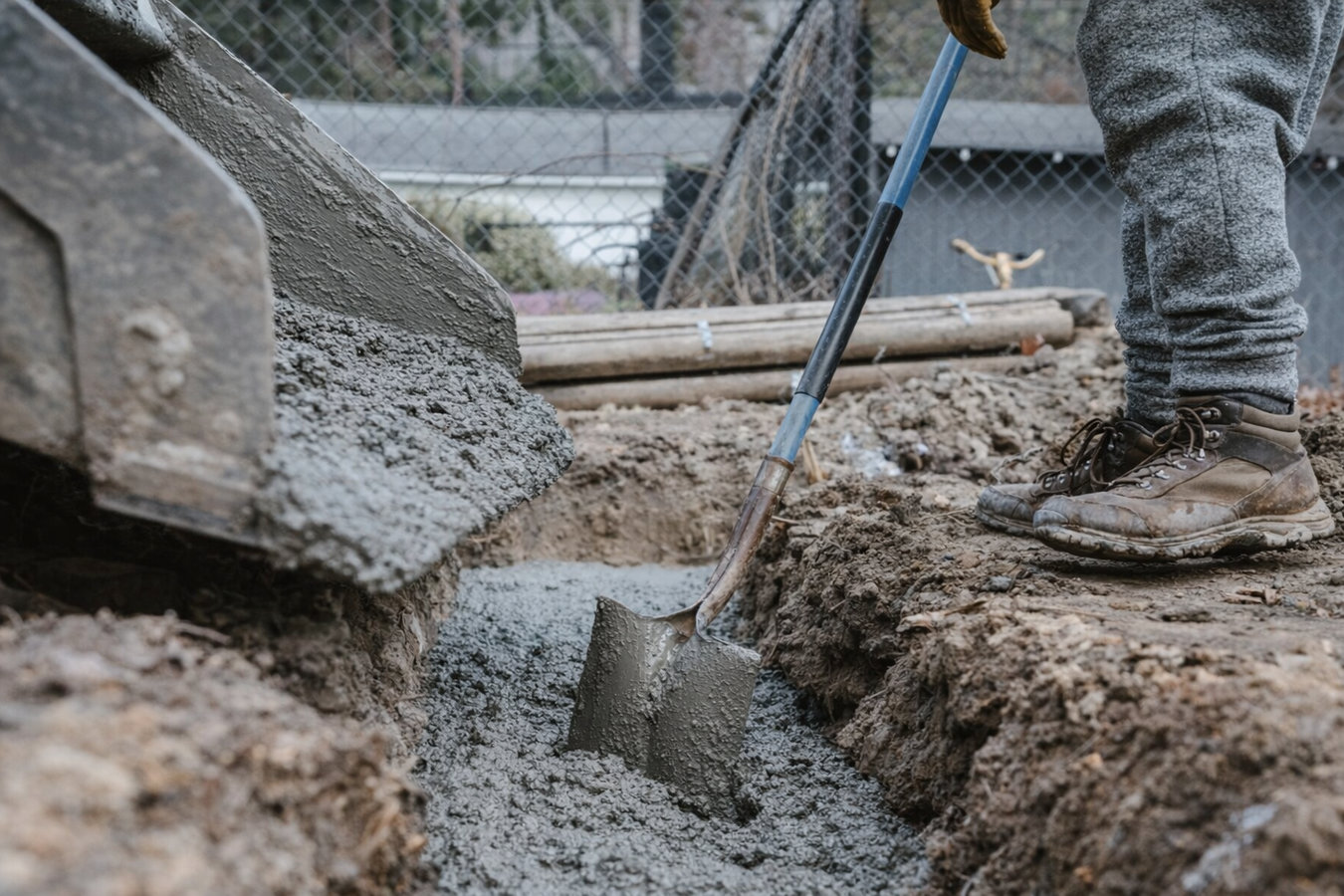
Concrete footings in Antioch, CA are poured by excavating to stable soil, setting forms and rebar to the depth and size your structure requires, passing a city inspection before the pour, and allowing the concrete to cure - most residential footing jobs involve one to three days of active work, with permit review adding one to three weeks to the overall timeline.
Most homeowners contact us because they are adding something to their property: a deck, a pergola, a room addition, or a new structure that needs a solid base. In Antioch, the clay soil and seismic zone requirements make footing depth and reinforcement more demanding than in many other parts of California. Getting those details right is what separates a stable structure from one that begins to shift within a few years.
If your project involves a larger structure that needs a continuous base rather than individual footings, our foundation installation service covers the full system from grade beam to finished slab.
If your deck moves when you walk on it, or if the posts lean even slightly, the footings below may have shifted or deteriorated. Antioch's clay soil pushes and pulls footings with every wet and dry season. A deck that moves is a deck that could fail, and catching it early is far less expensive than a full rebuild.
Diagonal cracks running near door or window corners, or horizontal cracks along a wall near a recent addition, can indicate a footing settling unevenly below. Antioch's expansive soil dries out each summer and can slowly pull away from a footing that was not deep enough. A crack widening over time is more urgent than one that has been stable for years.
When a door that used to swing freely starts catching the frame, or a window will not close all the way, the structure may be shifting. If it is happening in multiple places at once, or started after a wet or dry season, it is worth having a professional look at the foundation. This symptom is common in Antioch's older neighborhoods where footings predate current soil and seismic standards.
Any deck, pergola, shed, room addition, or carport in Antioch needs footings. Before you start, you need to know what the soil underneath will support. Parts of Antioch near the Delta have softer or fill soil conditions that require a different approach than the upland clay areas. Starting without an assessment is how expensive problems happen later.
We pour spread footings for decks and structures where individual posts carry point loads, and continuous wall footings for additions and retaining walls that need a linear base below the wall line. The type is determined by what you are building and what the soil can support at your specific site. In Antioch's clay-heavy ground, we routinely go deeper than the minimum code requirement to reach stable, undisturbed soil that will not shift with the wet-dry cycle.
When your project includes both footings and a larger concrete structure, we coordinate with our foundation installation service so the footings and foundation system are designed and poured as one continuous unit. This avoids the common problem of mismatched depths or rebar that was sized for the footing but not the full foundation.
For projects where footings need to be poured alongside a raised structure, our foundation raising service can address any existing settlement at the same time, so your new footings tie into a level, stable base rather than an already-compromised one.
Best for decks, pergolas, and structures where individual posts need point-load support.
Suits room additions, retaining walls, and structures that need a linear base along the wall line.
For structures where existing footings have failed or shifted and need to be replaced before rebuilding above.
Antioch and the surrounding Contra Costa County area sit on expansive clay soils that are among the most demanding conditions for any below-grade concrete work. The soil swells in the rainy season and contracts through the dry summer, putting steady pressure on footings from the sides and below. A footing poured just deep enough to pass the minimum inspection will often start to shift within a few wet-dry cycles. We dig to where the soil is undisturbed and stable, which in many parts of Antioch is deeper than the code minimum, and we use rebar sizing that accounts for the lateral pressure clay soil exerts.
Antioch also sits in an active seismic region of California, near the Calaveras and Greenville fault systems. The state's building code requires footings in this area to meet earthquake-resistance standards, which means specific minimum dimensions and steel reinforcement details that go beyond what is required in non-seismic zones. This is not optional - it is what the city inspector checks before any concrete is poured. Homeowners in Pittsburg and Brentwood face the same seismic and soil conditions, and we build to the same standard throughout the region.
Antioch also has an older housing stock in its established neighborhoods, with many homes built in the 1960s through 1980s before current seismic and soil standards were in place. If you are adding a deck or structure to one of these homes, there is a reasonable chance the existing foundation nearby was not built to today's requirements. We assess existing conditions during the site visit so you know what you are tying into before we pour. Homeowners in Concord deal with the same aging housing stock challenges, and a site visit before quoting is standard practice for all our footing work.
We ask what you are building and where, then schedule a site visit before giving you a firm price. Footing costs depend heavily on what is actually in the ground. We reply within 1 business day of your first call.
We submit the permit application to the City of Antioch Community Development Department and contact the 811 call-before-you-dig service to get underground utilities marked. Both steps happen before any excavation.
The crew excavates to the required depth, sets the wooden forms, and places the steel reinforcement. Before any concrete is poured, the city inspector visits to confirm everything meets the approved plans. That inspection is your independent confirmation.
Once the inspection clears, we pour the concrete and protect the surface during curing. Most footings need at least a week before any significant load is placed on them. We coordinate the final city sign-off and tell you exactly when the next phase of your project can start.
We handle permits, utility locating, the city inspection, and curing. Free on-site estimates only - footing costs depend on what is in your ground, not a phone guess.
(925) 503-1067We carry a current California C-8 Concrete Contractor license verifiable on the CSLB website before you sign anything. Our insurance covers your property for the full duration of the project.
We serve 12 cities across Contra Costa County and know the clay conditions, fault proximity, and permit offices in each area. That local knowledge directly changes how we spec every footing we pour.
We handle the City of Antioch permit application and all required inspections from start to final sign-off. Your footing is on record with the city, which protects you at resale and in any insurance situation.
Antioch is in an active seismic zone near the Calaveras and Greenville faults. We build to California's seismic reinforcement requirements as standard practice, not as an upsell. The permit inspection confirms it was done correctly.
Every footing we pour in Antioch is permitted, inspected by the city, and built to both California seismic and local soil standards. You can verify our license on the California Contractors State License Board website, and the USGS Earthquake Hazards Program maps the fault systems that shape how we build in this region.
Lift and stabilize an existing foundation that has settled or shifted in Antioch's clay soil.
Learn moreInstall a full foundation system for a new structure when your project requires more than individual footings.
Learn morePhone quotes are not reliable for footing work - contact us today and we will schedule a site visit within 1 business day so you get an accurate number.