Loading...
Serving Antioch, CA and surrounding areas. (925) 503-1067
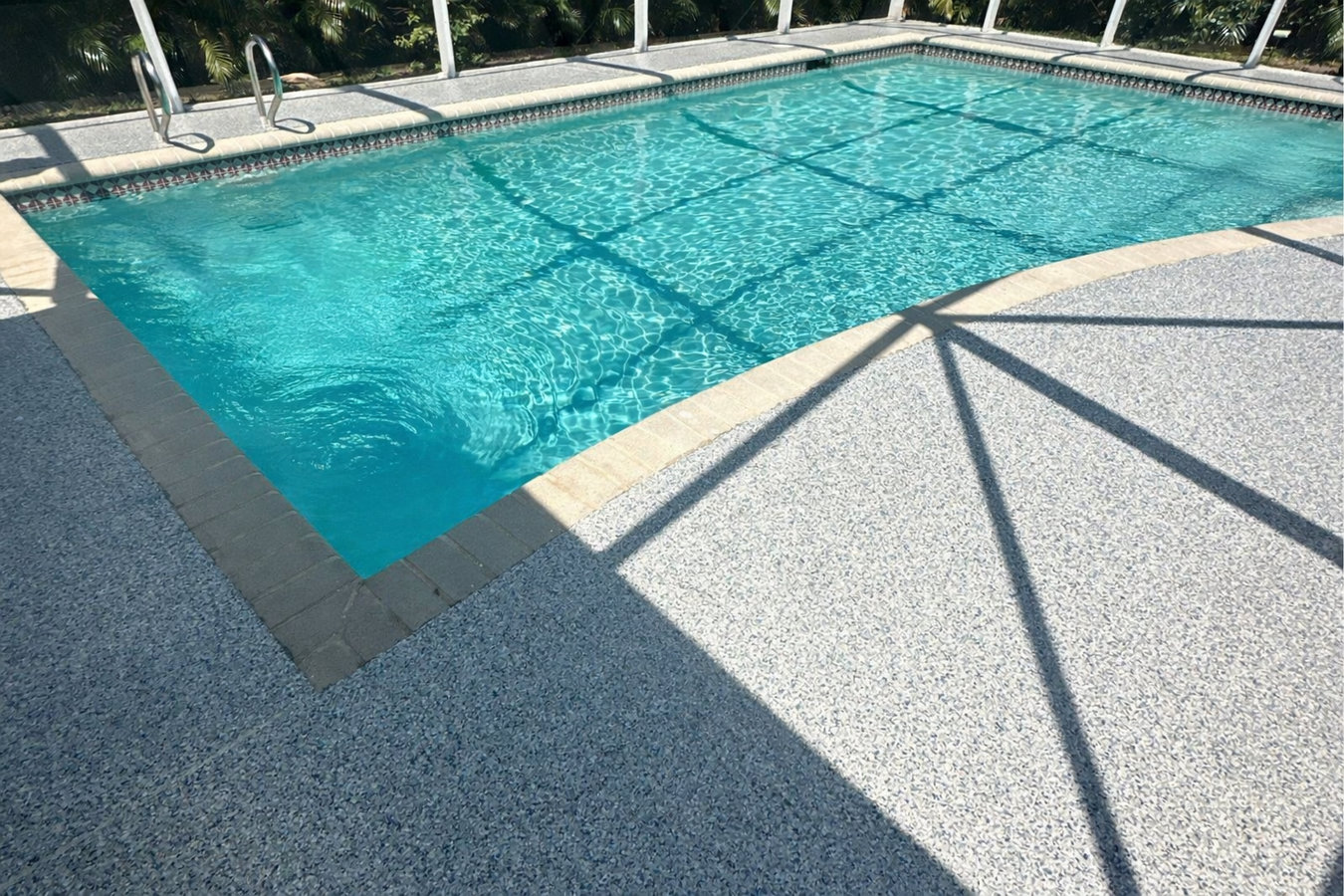
Cracked, rough, or crumbling pool decks make your backyard harder to enjoy. We build properly graded, sealed surfaces that hold up through Antioch summers and wet winters.
Concrete pool decks in Antioch, CA are poured around your swimming pool to create a safe, slip-resistant surface for foot traffic and outdoor furniture - most residential projects take two to five days from pour to walkable, with the full surface ready for normal use within a week.
Most homeowners reach out because their current deck has developed cracks, rough patches, or drainage problems that make the space uncomfortable or unsafe. In Antioch, clay soils and intense summer heat are the two most common causes - and both need to be addressed at the base level, not just on the surface.
If you are also planning to add steps leading into the pool area or down to a lower yard level, our concrete steps construction service can be coordinated in the same project visit and permit application.
Small hairline cracks in concrete are normal. But cracks wider than the edge of a coin - or ones that seem to grow each summer - mean something is wrong underneath. In Antioch, the clay-heavy soil expands with winter rain and contracts in the dry season, pushing on the slab from below. That movement will not stop on its own.
When the top layer of concrete starts to wear away, the surface becomes rough and abrasive. Around a pool, this is more than a cosmetic issue - it can scratch feet and make the space uncomfortable to use. If your deck feels noticeably rougher than it did a few years ago, the surface has started to break down.
A properly built pool deck slopes gently so water runs off toward a drain or the yard. If puddles form on the surface after the pool is used or a sprinkler runs, the deck has either settled unevenly or was never graded correctly. Standing water is a slip hazard and accelerates surface deterioration.
Flaking concrete - sometimes called spalling - happens when moisture gets into the slab and expands in Antioch's intense summer heat. White powdery patches are a sign that water is moving through the concrete and depositing minerals on the surface. Both mean the slab's protective layer has broken down and the concrete underneath is exposed to further damage.
The most common request is a stamped or textured finish: it looks more finished than plain gray concrete, stays cooler underfoot in Antioch heat, and provides better grip when wet. We press patterns into the surface while the concrete is still workable, which means the look is permanent - not a coating that can peel.
For homeowners with an existing deck that is structurally sound but cosmetically worn, resurfacing with a thin overlay is a lower-cost option that can refresh the appearance without a full pour. We assess the existing slab honestly before recommending either approach. If the base has shifted or drainage has failed, resurfacing covers the problem without fixing it - and we will tell you that upfront.
Every deck we build is sloped to drain water away from the pool edge and the house. We also offer colored concrete using integral pigment mixed into the pour - a finish that stays consistent because the color runs all the way through the slab. For homeowners whose yards connect to a patio or entertaining area, our concrete patio construction service can match the finish and elevation of the pool deck for a seamless transition.
The right choice for most Antioch homeowners: slip-resistant, cooler underfoot, and available in stone or brick patterns.
A practical, clean option for homeowners prioritizing budget and durability over decorative finish.
For decks with a solid base but worn surface - a cost-effective refresh without a full replacement pour.
Antioch sits in the inland East Bay and regularly sees summer temperatures above 95 degrees, with heat spikes past 105 common in July and August. When concrete is poured in extreme heat, it can dry too fast on the surface before the interior has fully set - which leads to cracking and a weaker finished product. Experienced local contractors schedule pours for early morning and use curing techniques specific to this climate. It is worth asking any contractor you are considering how they handle hot-weather pours.
Antioch's pool season runs long - most homeowners use their pools from April through October. That extended season means more foot traffic, more exposure to pool chemicals splashing onto the deck, and more UV damage from the sun. A quality sealer applied after curing and refreshed every two to three years makes a meaningful difference in how long the surface holds up. We work on pool decks across Pittsburg, Brentwood, and throughout Antioch - the same soil, the same climate, the same conditions that affect every deck we build.
Many of Antioch's newer subdivisions east of Highway 4 are governed by HOAs with design guidelines that can restrict colors, patterns, or materials on visible outdoor surfaces. Before finalizing any finish choice, check your HOA documents. We are familiar with the kinds of restrictions common in this area and can help you choose a finish that meets HOA requirements. For reference, pool deck permit requirements are handled through the City of Antioch Building Division.
We come to your pool area, measure the space, check existing concrete and drainage, and give you a written quote. We respond within 1 business day of your first call.
We apply for the City of Antioch building permit on your behalf before any work begins. Permit processing typically takes a few business days to two weeks. We give you a firm start date once approved.
If an old deck is coming out, we handle demolition and haul-away. We prepare the ground, set forms, and pour the concrete. In summer, we start early morning to avoid peak heat and use curing techniques suited to Antioch's climate.
After the concrete cures, we apply a quality sealer and schedule the city inspection. Once the permit is closed, we walk the finished deck with you to confirm drainage slope, surface finish, and overall condition.
Free written estimate, no obligation. We handle the permit and respond within 1 business day.
(925) 503-1067Every pool deck project we build is covered by a current California C-8 Concrete Contractor license. Verify our license number directly on the CSLB website before signing any contract.
We have poured pool decks across Antioch, Pittsburg, Brentwood, and the surrounding East Bay. We know the clay soil conditions and the HOA neighborhoods that govern many of the newer subdivisions east of Highway 4.
We handle the City of Antioch permit from application through final inspection. Your deck is documented and compliant - no issues when you sell or refinance.
The number you agree to is the number you pay. Our written estimates cover demolition, base prep, the pour, finishing, sealer, and cleanup - nothing left vague.
Pool deck work in Antioch requires more than a solid pour. It requires knowledge of the local soil, experience managing hot-weather placement, and familiarity with the city permit process. Those details are what separate a deck that holds for 25 years from one that cracks in the first two. You can verify our license at any time through the California Contractors State License Board.
Build safe, code-compliant steps connecting your pool deck to the rest of your yard or home.
Learn moreExtend your outdoor living space with a patio that matches the finish and grade of your pool deck.
Learn moreSummer pool season books fast - call or submit your project details now and we will get back to you within 1 business day.